

Information
Future sustainable solutions: How Stanford and Sweden are working together
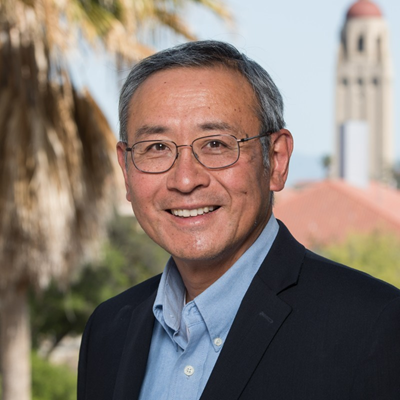
Jimmy Chen leads global partnerships at Stanford’s Doerr School of Sustainability. He sees great potential in combining the strengths of two of the world’s leading innovation ecosystems. Jimmy is one of Vinnova’s closest collaborators at Stanford, and we took the opportunity to ask him a few questions during his recent visit to Sweden.
Why do you see Sweden as an important partner in research and innovation?
Sweden, like Stanford and Silicon Valley, is a true innovation centre in the world. Sweden has world-class universities and a long history of innovation. There is close cooperation between academia, industry and the public sector. You think long-term and care about sustainability.
Sweden, like Stanford and Silicon Valley, is a true innovation centre in the world.
It is very close to the work we do in the field of sustainability. Therefore, there is also a strong interest in collaborating on these issues.
How do you see the Swedish innovation system compared to what exists in California?
In Silicon Valley, we have a culture where we move quickly, and we have strong systems for venture capital and funding. But sometimes things go so fast that we break things down along the way, and that's not always positive.
The Swedish innovation system is also very successful, but it's more structured, consensus-oriented and long-term. Sweden does this very well. But one question I often ask is if there are ways to do it even faster? The question is whether we can find a combination of the two models where we can act quickly without creating problems. I see opportunities to increase the pace without leaving the system that Sweden has built up and refined for a long time.
Stanford has a well-established model for collaboration. What is the recipe for success?
I believe that both business and academia have their own roles and strengths. An important part of success is understanding these roles, gathering people and building relationships that benefit from the strengths of both parties, so that it becomes a win for everyone, around issues that both sides really care about.
The goal is to create collaborations and activities that actually meet the needs of both parties in a particular area. Another thing I've discovered is how important deep and trusting relationships are. They help navigate an organizational complexity and make it possible to drive the work forward. There is also much of the speed needed.
You are involved in a collaboration with Lund University on digitalisation of electricity grids and power electronics. Can you tell us a little about it?
Both Lund University and Stanford work with microgrids. Lund is building a microgrid and Stanford has two. At the same time, major changes are taking place in how energy systems need to function, and this creates natural opportunities for cooperation.
An important part is about protocols that make it possible to build, operate and interconnect such microgrids. This is the work we are doing together with Lund, and it is very exciting. We are also investigating how to integrate other areas than traditional electricity supply, such as transportation and thermal energy storage.
There are plans for a living lab where new solutions are tested in real environments Blekinge Institute of Technology, where you are involved?
Living labs are a way to bridge the gap between research and practical application by taking ideas from the lab and testing them in real environments in a safe and structured way.
At Stanford, we are now building up a global network of institutions working in this way. What is particularly exciting about BTH is that they are very committed to developing such a platform. They are also planning many new buildings and investments on campus.
I see the opportunity to create a real living lab campus where energy efficiency, energy storage, transportation and energy conversion are integrated into a coherent whole. It can be very exciting.
Are there other collaborations with Sweden that you want to highlight?
Yes, we have several. The Knowledge Foundation has generously funded an opportunity for ten PhD students to complete an exchange period at Stanford and spend between six months and a year there. We are currently in the middle of implementation, and it is going very well.
We are also investigating the possibilities of including more Swedish universities in our international network of living labs.
We are also building up a global sustainability network. Many initiatives are underway, and I am really looking forward to following their development.
See interview
Last updated 14 October 2026