

News
How Hejmas became a startup company in Karlstad, Sweden
The Canadian startup Hejmas relocated to Karlstad in central Sweden with support from a Swedish startup accelerator. Today, fast-growing hemp sways across the company’s fields near Kristinehamn from May through August. Each year, the crop is harvested and processed using a patented method that separates lignin from cellulose, creating a versatile bio-based material with the potential for a wide range of applications, according to the company’s CEO.
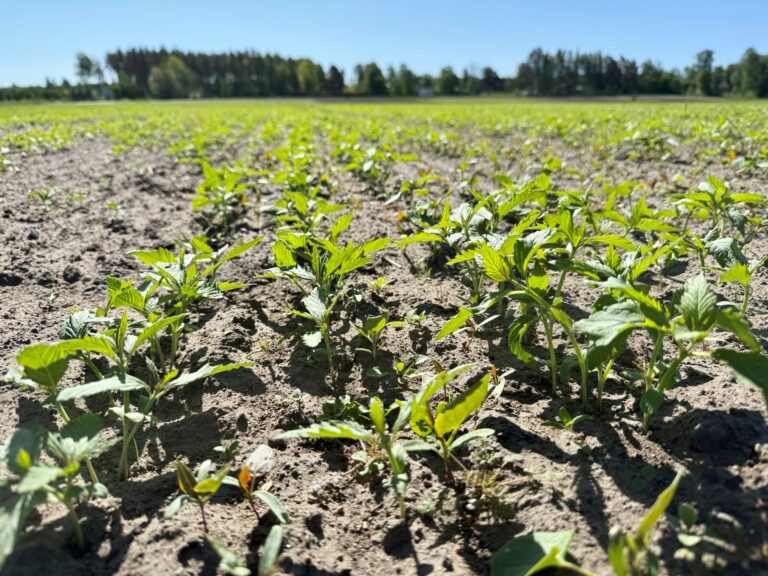
Hemp seedlings outside Kristinehamn, image source: Hejmas
“Indeed, hemp is the hottest material on Earth right now,” says CEO Edward Murray from Hejmas’ headquarters in Karlstad. “It can be used for a wide range of products. And all of the by-products can be utilised, while the process chemicals can be recycled.”
As the newly appointed CEO of Hejmas, Edward Murray has helped rapidly redirect the company’s focus, from being a pulp producer to becoming a materials company using hemp as its primary raw material. Hemp-based materials are attracting growing attention and are cultivated across large parts of Europe. The crop grows quickly, is relatively resilient to changing weather conditions and can be used to create a wide variety of materials.
But how did a start-up from Calgary, Canada, end up in Värmland, Sweden?
A Swedish accelerator opened new opportunities
It was during an international matchmaking organized by Ignite Nordic in 2023 that Hejmas founder and then-CEO Marek Hejduk discussed the company’s future with representatives from Karlstad-based accelerator Sting Bioeconomy, a sister accelerator to Sting. That conversation ultimately led to the company establishing operations in Sweden the following year, with its headquarters in Karlstad, Värmland.
“We have a very strong framework for start-ups in Sweden,” says Edward. “It is straightforward to start and establish a business here.”
With hemp as an alternative material and Europe’s long history of hemp cultivation, Sweden’s start-up-friendly business environment made it easier for Hejmas to establish its headquarters in Karlstad.
Interested in Canada-Sweden collaboration?
Don't miss the kick-off of the Sweden-Canada Innovation Days on October 8.
Similarities between Sweden and Canada
The fact that a Canadian company chose to establish itself in Sweden is largely due to Sweden’s strong start-up ecosystem and the highly valuable support provided by Sting Bioeconomy. There are, of course, other significant similarities between Canada and Sweden that make Sweden an attractive complement to Canada.
Just over two years after Hejmas established itself in Värmland, the company adjusted the direction of its future production under the leadership of its new CEO, Edward Murray. Around the turn of the year, the company shifted its focus from pulp production to developing new materials, all based on hemp as the core raw material.
“We got the idea when we looked at how we could use the residual products generated during the pulp production process. That was when we realised the opportunities that exist within the hemp industry.”
“We are now a materials company where the products we produce use residual streams from previous production processes as their source material. Everything begins with pulp production, which remains a very important product for us.”
From pulp to textiles and biofuels?
Historically, hemp has been widely used in Sweden and across much of Europe as a raw material for products such as rope, sails, clothing, furniture and certain clinical applications.
At times of crisis, hemp has also been used as a substitute for materials that were more difficult to obtain.
Will we one day make our clothes from hemp?
Hemp is a sustainable material and could be well suited for textile applications such as workwear. This is an area that has been explored in greater depth by institutions including the Swedish School of Textiles in Borås.
“There is already research being carried out on fabric made from hemp,” continues Edward Murray. “We are also exploring how we can develop a softer yet durable material suitable for products such as workwear. We are in dialogue with the Swedish School of Textiles about this.”
However, textiles are only one of many areas attracting interest from researchers working with alternative raw materials. Construction materials, gunpowder, animal feed, bioplastics, biodiesel, bio-petrol, cosmetics and materials for screens used in electronic devices are just some of the many potential applications.
Facts: What can hemp be used for?
Hemp is a fast-growing crop that can be cultivated in almost any climate. Today, it is grown across Europe for the production of textiles, food products, animal feed, construction materials and paper. On the European Commission’s website, you can learn more about the uses, research and history of hemp:
Hemp – Agriculture and Rural Development – European Commission
What’s Next?
What will be the next type of material that can be manufactured using industrial hemp as a base? Hejmas agrifibre technologies has cultivated hemp with great results in Värmland, Sweden, in 2024, 2025 and 2026. They are now entering the final testing phase with clients for several materials while advancing others in parallel.
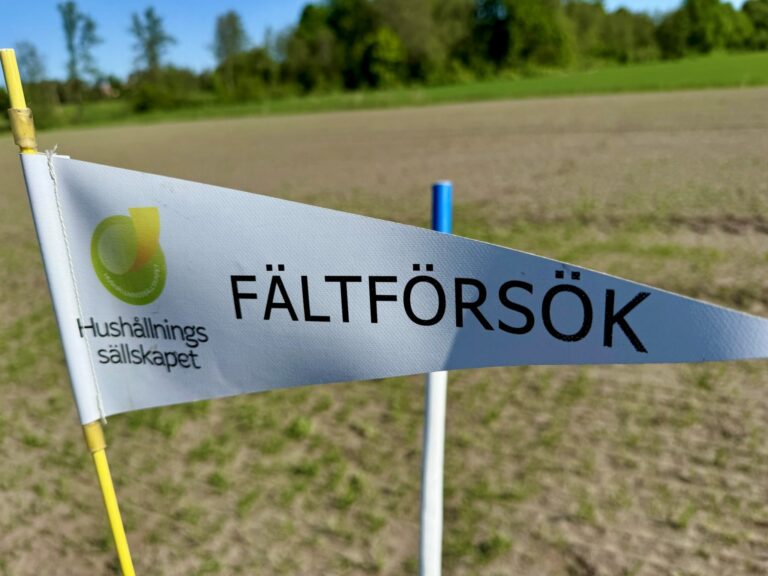
Field trials outside Kristinehamn in Värmland. Image source: Hejmas
Curious about other collaborations between Canada and Sweden?
Last updated 8 October 2026