
We need to develop our ability to imagine alternative futures
A sustainable food as well as mobility system is crucial for reducing negative environmental impact, improving people's health and quality of life and promoting economic sustainability. We often tend to get stuck in technical solutions and new products and services. But we also need to focus on innovative ways of working, collaborations, policy and behavior changes.

The transition requires that we succeed in reconsidering and changing the way we eat, travel and move around. To do that, we need to be able to fantasize and imagine futures we currently cannot even imagine.
"The future exists first in imagination, then in will, then in reality" - Barbara Marx Hubbard
We need new stories about the future
"We have a crisis in imagination and not in solutions" I hear Sara Gry Striegler at Danish Design Center say during the breakfast seminar "How to Use Futures Design to Stretch Your Imagination”. Many of us have realized that there is a lack of ability to imagine alternative futures that differ radically from what is here and now. Som Alvin Toffler emphasizes in the book "Future Shock”, it is much more important to be imaginative than to be right when it comes to thinking about the future. But it is extremely rare that we adults are encouraged to look up and think the unthinkable. We need new and engaging stories that people believe.
For those of us who carry out conversion work, it is important that we practice our ability to create commitment to how we can eat, travel, live, consume and so on in the future. We need to show possibilities that at first glance can be perceived as offensive, provocative, surprising and above all absurd. Som Jane McGonigal at the Institute for the Future puts it "If you really want to innovate or you really want to make a significant change in society you have to have ideas that are far outside the mainstream".
Strategic foresight - method of discovering the future
What futures do we want to exist, how can we get there and how can we avoid futures we don't want? One way to do that is to use strategic foresight. Foresight is a method that gives us insights, understanding, inspiration and motivation that allows us to shape the future - and not just let it happen. It is not about predicting the future. It is about working with scenarios about possible futures based on the knowledge we have today. With their help, we can make decisions today that shape our tomorrow the way we want. Foresight work is data-driven and identifies patterns based on signals and analyses. In this way, we can discover when, for example, changed behaviours, new business models or new services are about to emerge. Based on what is most important for the necessary change we are facing, areas are then selected where in-depth scenarios are created. One way to work with in-depth scenarios is future prototypes.
A future prototype should evoke emotions
A future prototype is a "thing from the future" such as a product or gadget that we can visit, see, feel, hear or otherwise experience. It can be signs, products, clothes, food, information materials, processes, services, apps and so on. A future prototype is deliberately designed to provoke thoughts about possible futures, desired and undesired, that have potential to create engagement and dialogue. Future prototypes are often designed and produced to be placed in real, everyday spaces so that people can encounter them and be both surprised and provoked as they get a sense of what the future could be like. These feelings are an opportunity to make people personally connect with the future and bypass our brain's preference to think primarily about the present.
I myself fantasize about a future prototype that illustrates the voting booth of the future. Voters get to step into both the futures that the politicians say they want to create. Then they get to go into another voting booth that is not created according to the party's election program, but based on data based on your inner values. The commitment to political involvement has decreased over many years. Could such a future prototype involve more people in politics, new parties or existing parties rethinking?
Do you have project ideas on future prototypes that can help us create a sustainable food and mobility system?
In the call for proposals "Design sustainable solutions of the future within the mobility or food system", you can apply for money to create a prototype of a possible future based on a future scenario. This is to stimulate the ability to imagine different futures, generate discussions and shape future mobility or food systems in a sustainable direction.
Read more here:
Shape the sustainable solutions of the future within the mobility or food system
Do you want to see examples of future prototypes?
Latest blog posts
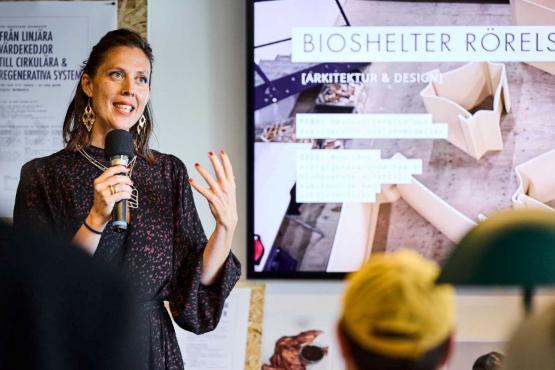
A regenerative, stakeholder-driven value system

Fiona Hazell
MAD Group, projektledare för The Boardroom
Emelie Ekblad
MAD Group, biträdande projektledare för The Boardroom
Last updated 23 January 2024
Leave a comment
You have chosen to disallow certain cookies and funtions on our website, such as commenting on blog posts. You can change your privacy settings at any time to allow these functions and get a better experience.
Change privacy settings