

News
Swedish companies accelerate future defense capabilities
Civil-military innovation is not just about developing solutions that immediately strengthen Sweden's defense, but about building long-term innovative capacity, technological sovereignty and strengthened Swedish competitiveness. In an era characterized by geopolitical shifts, increasing uncertainty and rapid technological development, the ability to quickly understand, develop and translate new technology into actual capability is becoming increasingly crucial.
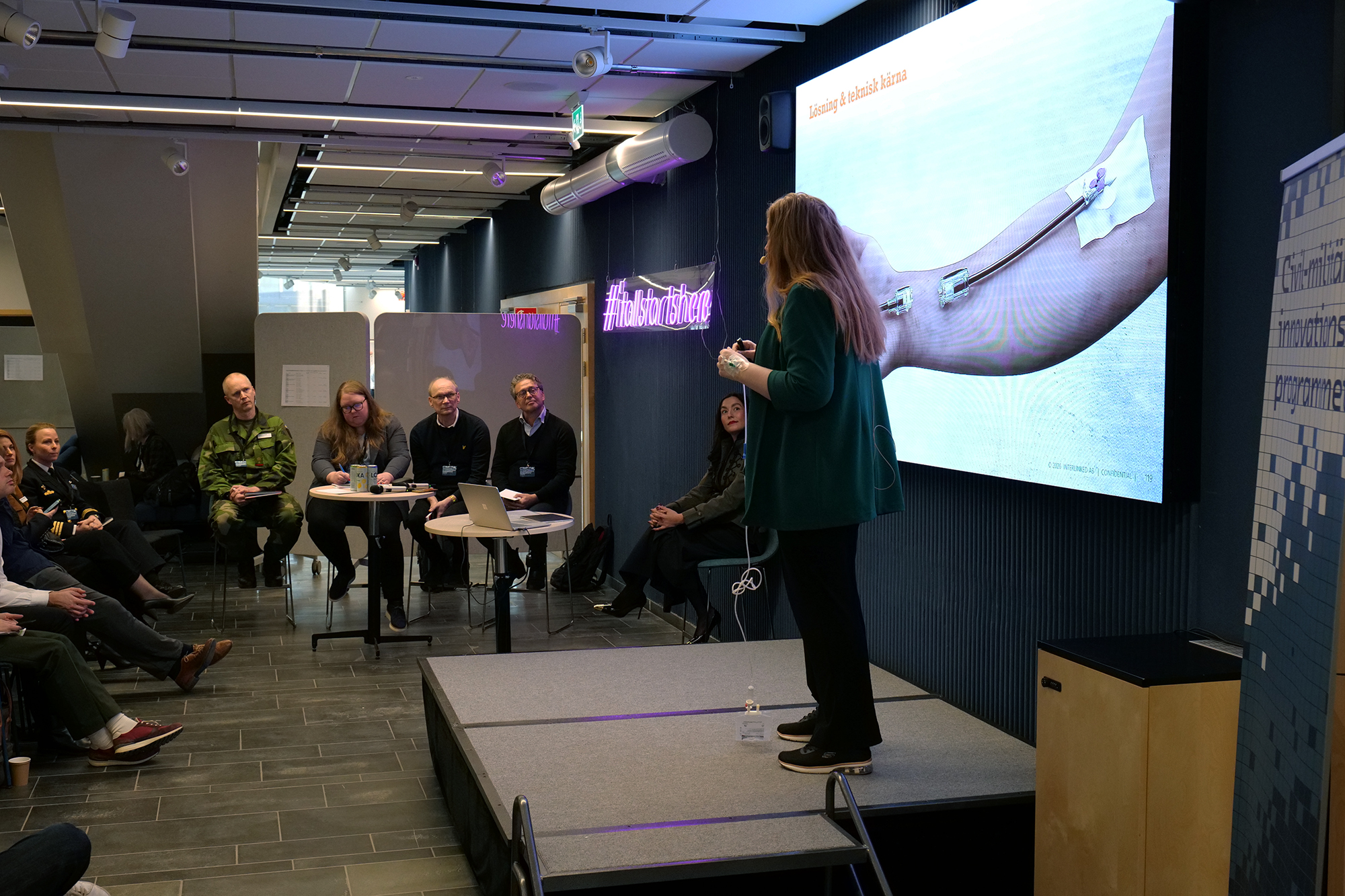
Image: Katarina Hedbeck, co-founder of Interlinked, pitches how their product can ensure and maintain intravenous (IV) access to treat trauma and hemorrhagic shock in the care of combat casualties.
The civilian sector is currently driving the development of much of the technology that will shape future defense capabilities. At the same time, technological development is becoming increasingly geopolitical. The ability to integrate civilian innovations into military and security-related contexts is therefore no longer a complement, but a strategic necessity.
– There is a major technological development in areas such as automation, interfaces, AI and autonomous systems. This makes it more difficult to remain hidden, more difficult to combat a technologically advanced adversary and requires faster decisions. At the same time, it is easier to build situational awareness and collaborate. We need to translate this into the ability to protect Sweden and allies in NATO, says Brigadier General Andreas Odung, Deputy Chief of the Defence Staff's Strategy Unit at the launch conference for Acceleration of Civil-Military Innovations.
In the Acceleration of Civil-Military Innovations initiative, Swedish companies are developing their technology and business strategy to meet defense and security needs. The program aims not only to strengthen individual innovations, but to build an innovation system that can react quickly when the world changes overnight – a Swedish defense innovation readiness. Small and medium-sized companies have received funding to carry out innovation projects for the development and verification of civilian technology for military purposes. The companies also participate in accelerator programs with a focus on developing complementary business strategies aimed at the defense and security market.
The program is run by five innovation environments that offer business development support and create meetings between entrepreneurs, defense actors and need owner. Through the initiative, 30 Swedish companies have received support to develop their technology, build understanding of the defense sector's needs and strengthen their ability to contribute to Sweden's security and resilience.
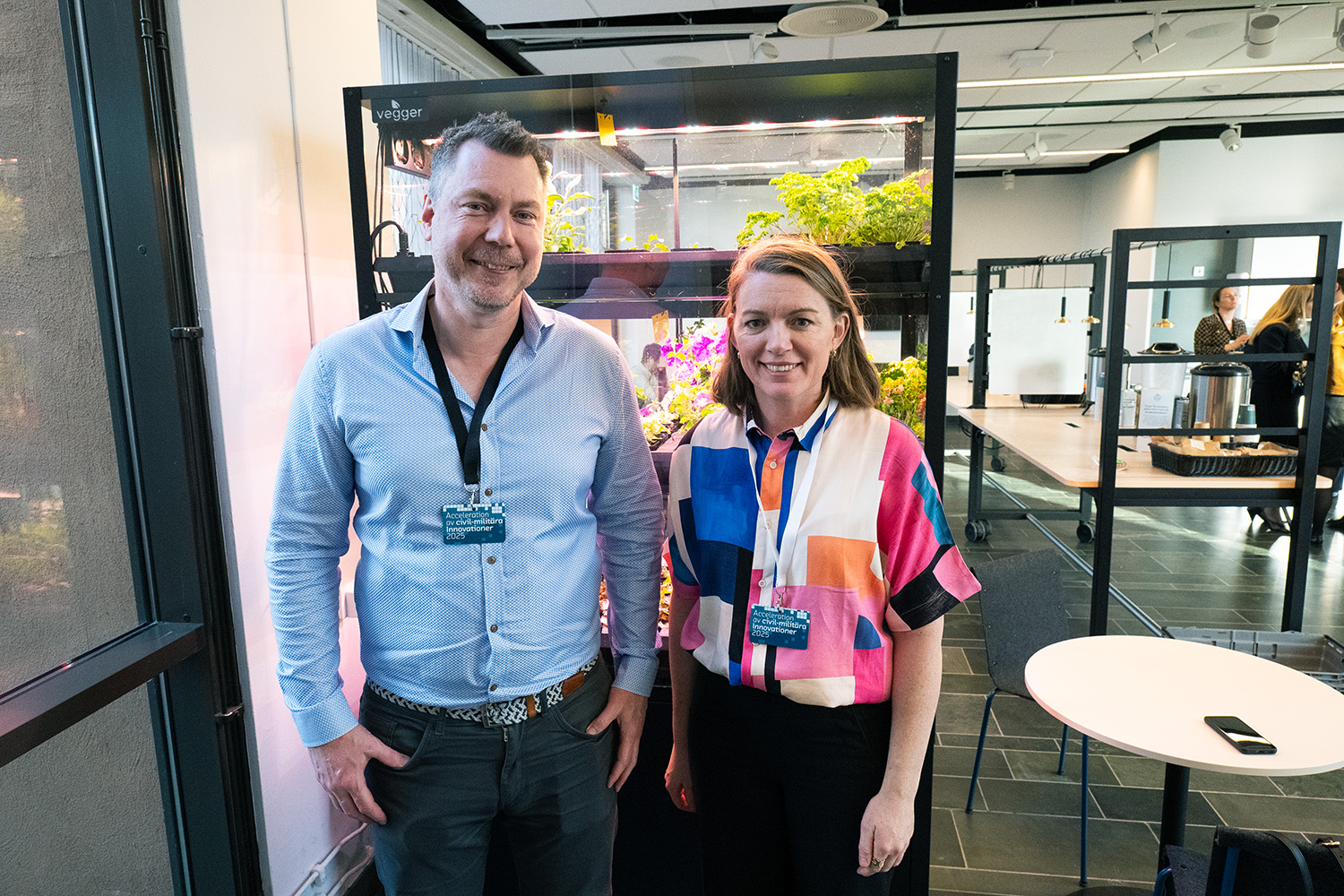
Image: Daniel Persson, coach in the accelerator Amyna and Emilia Forsgård project manager at Cstrider.
– We provide an introduction to the defense sector: what regulations and eligibility requirements exist, and we create contacts with need owner who can provide feedback to the companies. In the last four years, the need for defense innovation has accelerated significantly, and civilian-developed technology is becoming increasingly interesting for the Armed Forces, says Daniel Persson, coach in the Amyna accelerator.
Cstrider is one of the companies that has received support through Ideon and Amyna. They are working on small, electrically powered passenger ferries that can be remotely controlled and deployed where they are needed.
– Our product is primarily a civilian commercial product, but it has potential to be applied for military purposes and solve defense-related challenges around transportation, evacuation and troop movements. By participating in the program, we can further develop our technology to meet military needs together with Ideon and Amyna, says Emilia Forsgård project manager at Cstrider.
Technology is crucial for defense capabilities
Much innovation today is geopolitically driven, where the need to translate civilian technology into military purposes needs to happen faster than before.
– We are in a period when the world is changing rapidly with geopolitical shifts and accelerating technological development. This places eligibility requirements on Sweden being able to act quickly as a country to integrate civilian solutions into military defense. Creating access to civilian innovations is central to the security situation. Civilian actors, by virtue of their innovative capacity, have an important role to play in contributing in an innovative way to solving military and security-related challenges, says Alma Jacobson, responsible for the Acceleration of Civil-Military Innovations initiative at Vinnova.
Innovation that develops and strengthens military capabilities
Brigadier General Andreas Odung says that the Armed Forces must become more skilled at communicating what capabilities they want and what effect they want to achieve instead of detail-oriented innovation. This risks solutions becoming outdated by the time they enter the field.
– We want to be a learning opponent and be able to develop our capabilities over time. What worked six months ago does not always work today. We want to develop processes so that they work with the challenges we have today and those that arise in the future, says Andreas Odung.
Solutions will be based on NATO's priority technology areas, the so-called Emerging and Abbot Stevenson (EDTs). These have been identified as important for future defense capabilities.
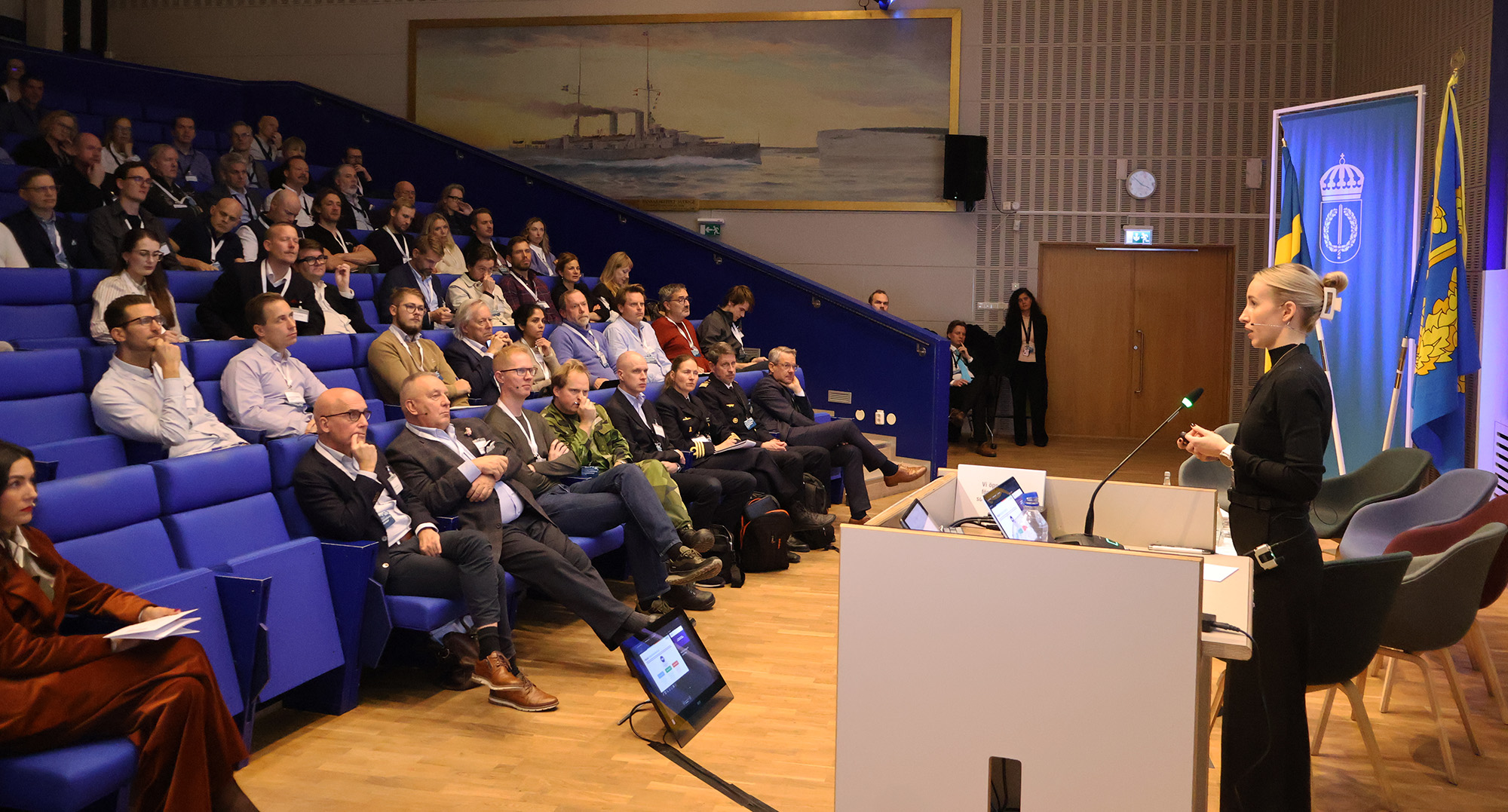
Image: Kaari Kink speaks at the start-up conference at the Swedish National Defence University.
– Contemporary conflicts, especially in Ukraine, have shown how commercial technologies can quickly transform a conflict if they are applied creatively. Modern conflicts focus on weaknesses and threats are becoming increasingly complex. This means that every time a company protects data, designs a smarter energy system or builds better applications for healthcare, they contribute to a stronger defense. Using new technologies is no longer an option, it is a must if we are to be able to defend ourselves, says Kaari Kink, program manager for NATO's innovation program Diana at the program's launch conference.
Read more about NATO's priority technology areas
Knowledge and networks provide momentum forward
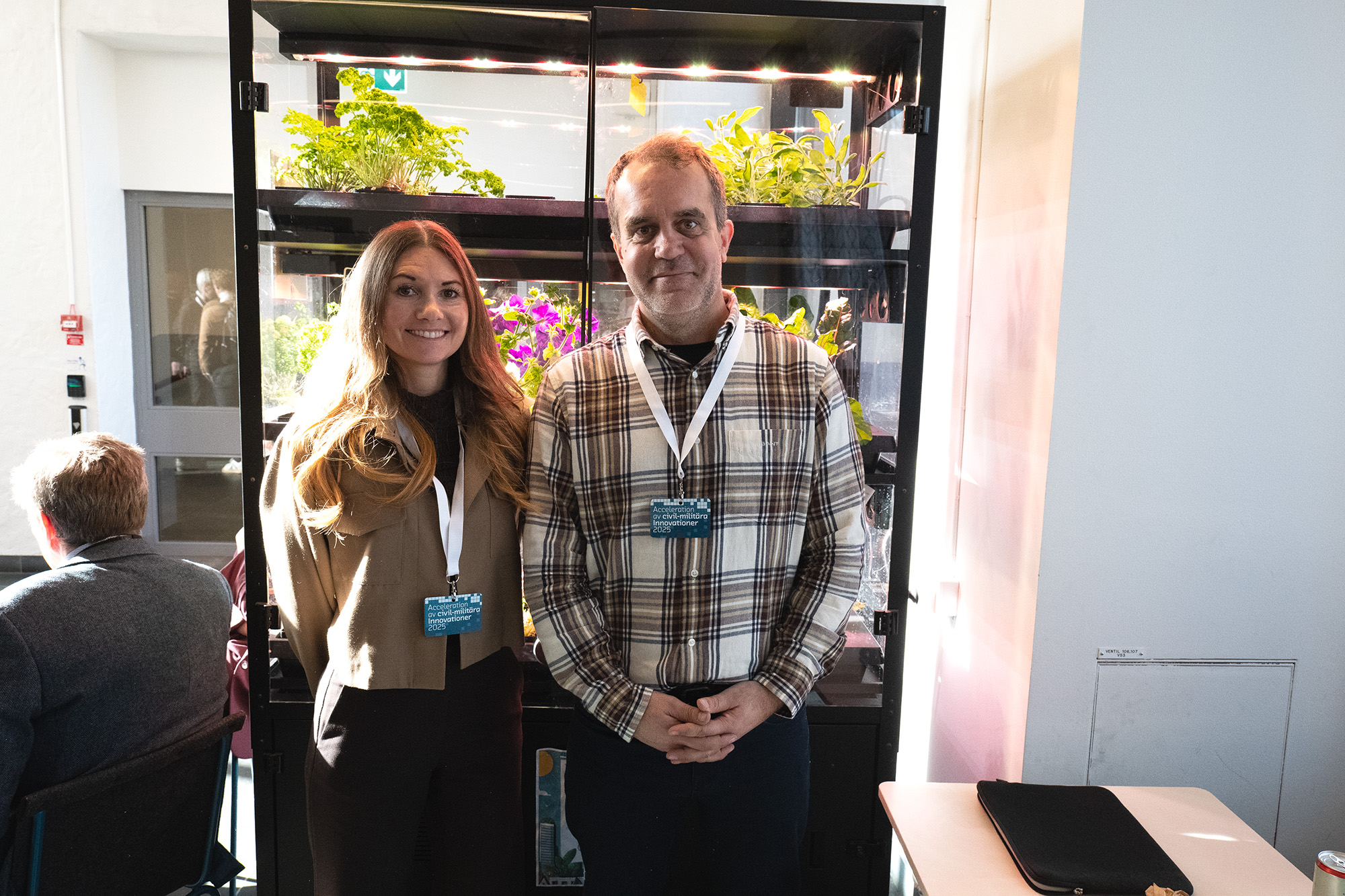 Image: Anna Rydberg and Eskil Åhlin. Anna Rydberg, CCO at Sito365, and Eskil Åhlin from Ironic Biotech have participated in the accelerator program at LEAD in Linköping.
Anna says that they have received support from a business coach who has helped them with knowledge and networking.
– Above all, we have gained a broad understanding of the Armed Forces, but also important inputs and contact with key people who we can ask questions to gain a better understanding of the Defense Sector. We want to validate our products in different medical transport situations. LEAD in Linköping has given us many valuable perspectives and a lot of knowledge in the area, says Anna.
Eskil agrees, adding that, in addition to working with LEAD, it has been valuable to have access to the various accelerators and other companies participating in the program.
– We chose LEAD because Linköping has a strong military history and expertise. We also had the opportunity to go out into the country and broaden our contacts. We have made contact with both companies in the defense industry and startups that we can collaborate with. Networking is an important part of participating in the accelerator program, says Eskil.
– We have also received tips and contacts from other startups participating in the program, says Anna.
Image: Markus Sjölund, Vimotech, which works with space infrastructure.
– We are a small company that spends most of our resources on technology development. The program has helped us by packaging and condensing knowledge about different parts of the defense industry. If we had acquired that knowledge ourselves, it would have taken significantly more time and resources.
Questions?
Last updated 1 June 2026