

The forest takes a step into the future with sustainable business models
How do we make the forest value chain more sustainable and circular? Vinnova is driving a transformation journey that is now taking the next step with new business models for increased sustainability in forest-based industries. This includes cost-effective solutions for the reuse and recycling of wood in the construction sector and making it profitable to invest in biodiversity.
Forests play a key role in climate, biodiversity and local communities. That's why Vinnova has brought together actors from the entire value chain to think differently.
The journey began with a large-scale system mapping and future scenarios about the forest and forest raw materials that involved over 50 actors. The result was ten future prototypes, which are a type of representation where you step into a possible future and can have conversations and which innovations could be decisive.
Now the next step is being taken, which is to develop business models that make the transition truly possible.
– We don't want to stop at understanding, but take the next step to create change. Business models are an important lever for that, and now we see how actors collaborate to build long-term, sustainable businesses, says Susanne Fornander, who is part of the team leading Vinnova's effort on sustainable forest value chains.
Nine project receive funding to develop new business models for sustainable forest-based industries. The projects involve collaboration between universities, businesses, authorities and other actors.
Circular life for wood products
I Sverige, large amounts of wood waste are burned, even though the wood is often of high quality. The Woodloop project, which is about a circular life for wood products, wants to change that.
Mattias Axelson is a researcher at the Stockholm School of Economics and leads the project.
“We see great potential in extending the lifespan of wood products. There is significant economic potential in that. By keeping the wood in the cycle longer, we also reduce the need for new forest raw material and thereby sequester carbon in the forest for longer,” he says.
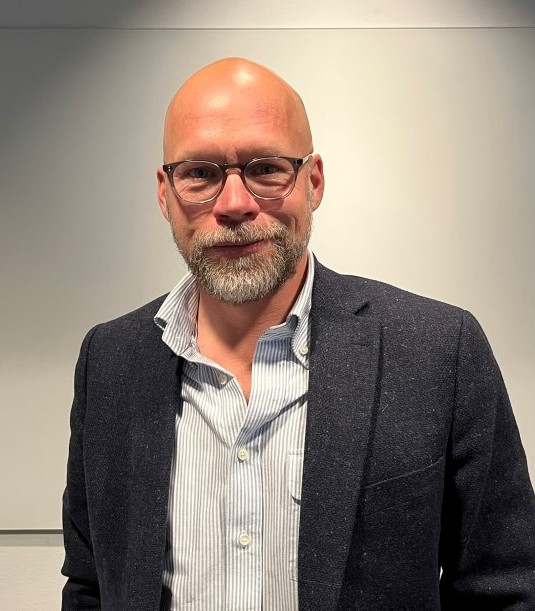
Mattias Axelson, researcher at the Stockholm School of Economics
The project is being implemented by the Stockholm School of Economics together with Beijer Byggmaterial, Ragn-Sells Recycling, Södra Skogsägarna and OBOS Bostadsutveckling, among others. Luleå University of Technology, Linköping University and the IVL Svenska Environmental Institute are also involved.
– To succeed, new logistics solutions and business models are required that make recycling cost-effective. Today, a functioning chain for the secondary market, quality assurance and transport is missing, which is something we want to build together with actors like Beijer and Rang-Sells. Our objective is to develop models and find the keys to scaling, says Mattias Axelson.
Give biodiversity a market value
Another example is the Biocredits project, which is about giving biodiversity a market value. The project is run by the forestry research institute Skogforsk together with, among others, KTH, WFF, the Swedish Forestry Agency, the Swedish Environmental Protection Agency, Kaunis Iron AB and Treebula.
Biodiversity currently lacks a clear market value. The project aims to change this by developing business models that make it profitable for forest owners and companies to preserve and restore ecosystems.
“There is a business model for biocredits and a high demand, but the market has not taken off. We want to understand why, where the barriers are and how we can create incentives for restoration in the forest,” says Madeleine Silverbratt at Skogforsk, who is leading the project.

Madeleine Silverbratt at Skogforsk.
The project analyzes obstacles and opportunities, looks at international examples and investigates what instruments may be needed to get both buyers and sellers on board.
“We hope to develop a model that works in practice and makes the deal attractive to all parties. It's about combining business benefits with natural values and creating credibility and long-term sustainability,” says Madeleine Silverbratt.
More business models receiving support
Other examples of business models to be developed include resource-efficient production solutions in forestry, a business model for flexible, demountable, reusable wooden houses, and bio-based insulation materials that replace fossil-based alternatives.
Questions?
Last updated 2 December 2025